
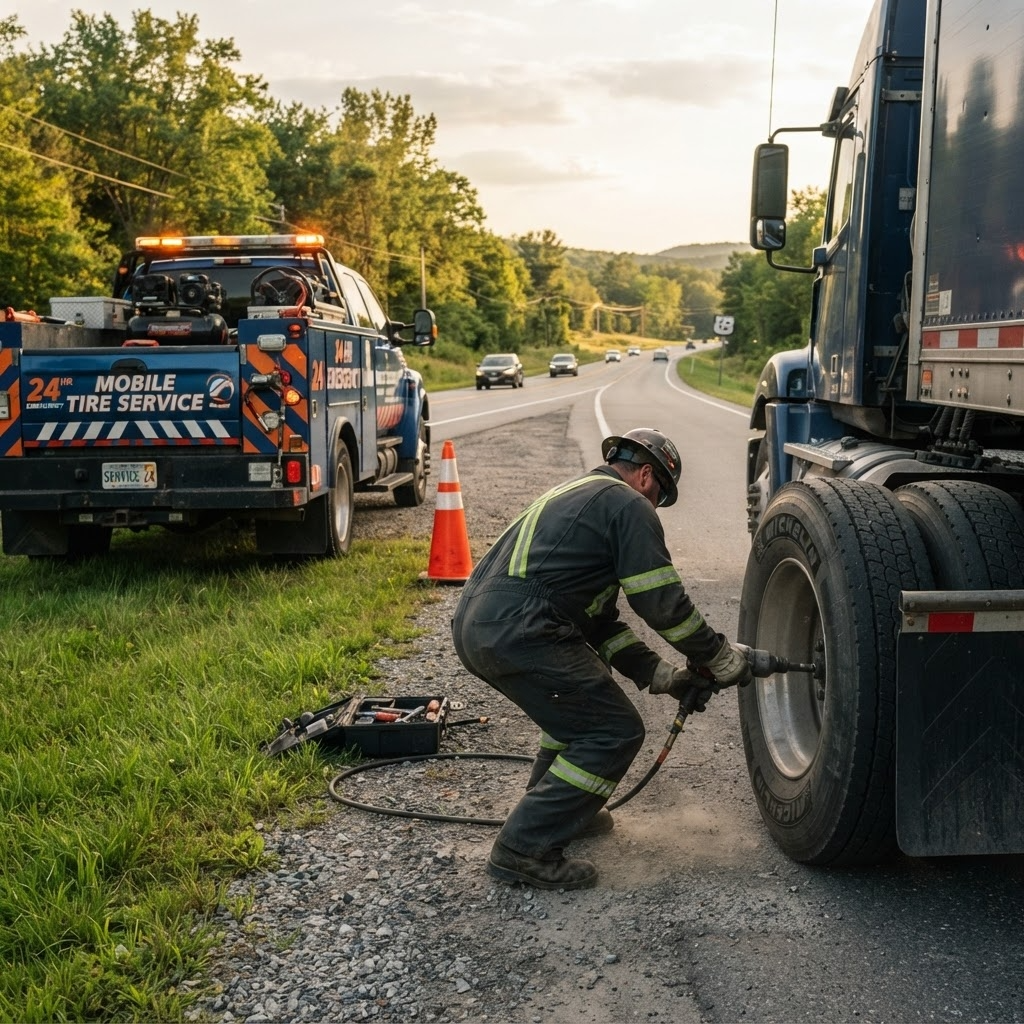
A mobile tire service business generated $4,885 in booked revenue from $784 in Google Ads spend in a single week — a 6.23x return, or $6.23 back for every dollar invested. Four jobs closed off the account that week, two of them heavy-duty commercial calls worth over $1,200 each. The net profit came to $4,101 after ad spend, on an account averaging a 5.00% click-through rate and a $24.51 cost per click. The result wasn’t luck, and it wasn’t a big budget. It was the payoff of a deliberate rebuild: tearing down a bloated, underperforming account and replacing it with a lean, intent-focused structure split cleanly into two service lines — a light duty campaign group for passenger and everyday tire work, and a heavy duty group for commercial and over-the-road roadside service.
The single most important structural decision was separating the account into those two service lines. Passenger and light-duty tire searches behave nothing like commercial over-the-road breakdowns — different urgency, different ticket size, different time of day. By giving each its own campaign group, budget and bidding could be tuned to the economics of each job type instead of averaging them together. In this standout week, the heavy duty group carried the account, delivering all six conversions and all six phone calls on roughly 83% of the spend, including two commercial roadside jobs that together totaled $2,860 — the kind of high-ticket work that makes a service account profitable even on a small daily budget.
The rebuild was seeded with search terms proven to convert — emergency, on-the-road phrasing that real drivers and dispatchers type when they’re stranded, rather than broad “tire shop” terms that attract price-shoppers. Trade language like “road service” and “roadside” consistently produced the cheapest, highest-intent leads in the account. Hundreds of dead keywords that had never served a single impression were stripped out entirely, preserving Quality Score and keeping clicks focused on searchers who were ready to book.
Because this is a roadside service, the phone is the conversion. Every tracked call was cross-referenced against booked jobs to prove which ad clicks turned into paying work — and to catch revenue the CRM had mislabeled. This closed-loop tracking repeatedly surfaced commercial jobs worth over $1,000 that would otherwise have gone uncredited to Google Ads, giving a true picture of return instead of a guess. Revenue was only ever counted when it could be tied back to Google, whether by source, by phone match, or by call-timing; jobs from referrals, repeat customers, or other channels were excluded. That discipline means the 6.23x return is a floor, not a flattering estimate.
None of this happened overnight. The rebuilt campaigns went through the expected early dip as they exited the learning phase — a lean stretch with low conversions that would have panicked a less disciplined advertiser into tearing it all down again. Holding the structure steady let the algorithm stabilize, and performance climbed steadily into the result described here.
Mobile and roadside tire service is a high-ticket, high-urgency vertical where a single commercial job can be worth more than a month of budget. The businesses that win here aren’t the ones spending the most — they’re the ones whose accounts are structured around how the jobs actually come in: split by service type, built on emergency intent, and measured by booked revenue rather than raw clicks. This campaign proves that with the right structure, a modest daily budget can return more than six times its spend, and that the phone call remains the most undervalued conversion in the entire category.
For businesses looking to scale a result like this, the path forward is clear: lift the budget on the heavy-duty group, which is currently capped below demand and leaving high-value roadside jobs on the table; keep the light and heavy split intact, since it is the foundation of the account’s efficiency rather than an optional refinement; maintain closed-loop call tracking, because matching calls to booked jobs every week is what turns “conversions” into provable revenue; and continue harvesting proven roadside search terms back into the account to keep cost-per-job low as volume grows.